

Rainfed Cotton
An introduction to cotton & water (part 1), by Simon Ferrigno

Farmers look up. They watch the skies for signs. A shift in the wind, a cloud thickening in the distance, a scent in the air that means rain might come. Or not.
All cotton is essentially watered either by rain or by irrigation. Today we start with rainfed cotton. Rainfed cotton takes up a larger area than irrigated cotton, but produces less yield, because it is less predictable, and harder to manage fluctuations.
Depending on where you live, rainfall might be common, even fairly predictable. An umbrella might be ever present in your car or backpack. Late August thunderstorms are almost desirable in their signalling of an end to summer heat. Equally, the pressure of building heat and humidity in a tropical climate is a cause of anxiety: will the rains come on time? Should I delay planting? Will rainfall be too heavy? Will my seeds germinate? Will my seedlings wash away? Will it not rain at all?
Rain: a matter of life, and disruption
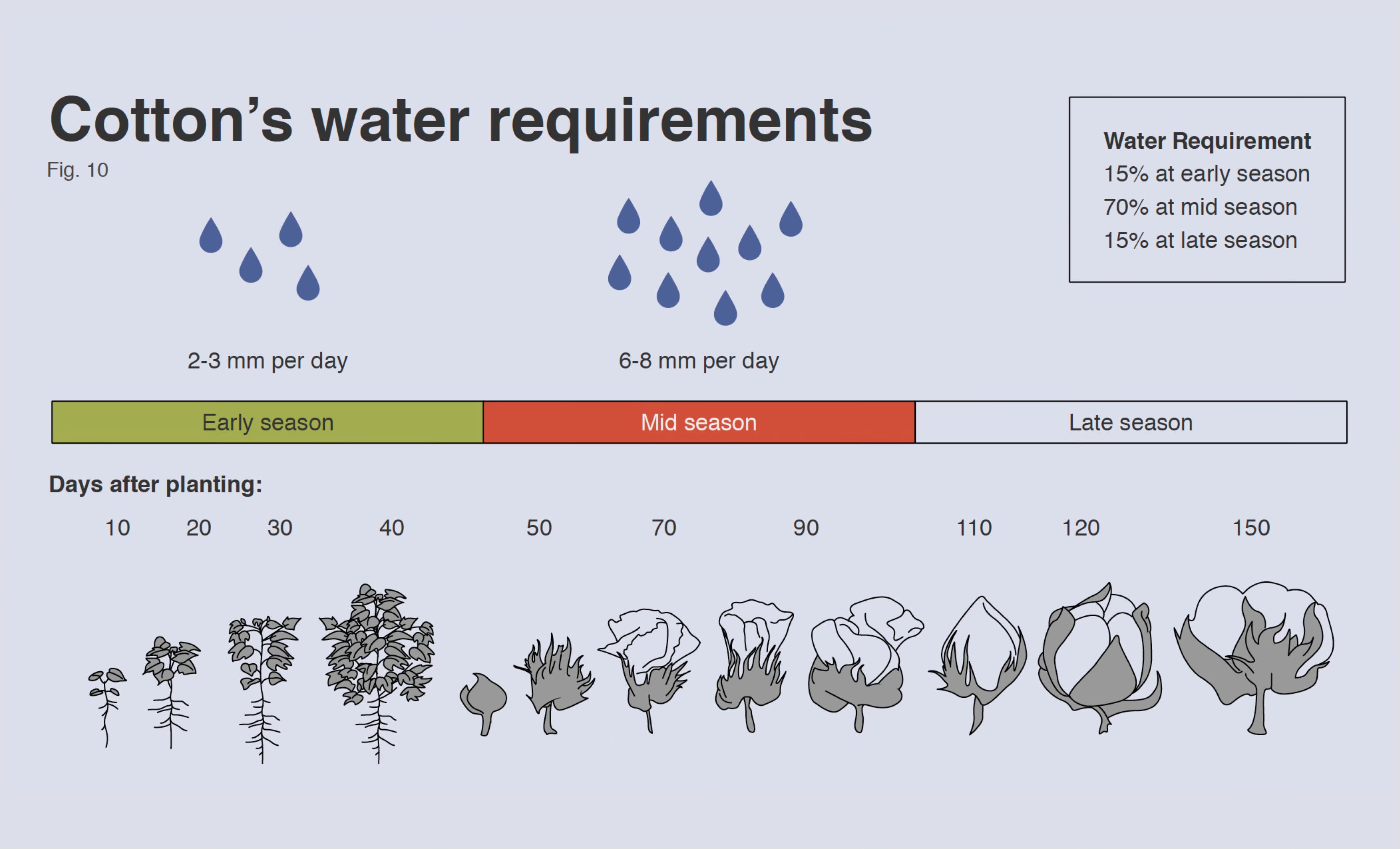
Water is the stuff of life. All crops need some. For cotton, life begins at around 600mm of rain a year. That’s the minimum required to grow a crop (over 800mm is ideal, and no more than 1200mm), all things being equal (equal meaning that the rain comes at the right time in the growth cycle, and that other growing conditions are met). Water is needed mainly at the beginning and end of the season. To start the seed and plant, and to help the boll form and mature. Too much rain at the wrong time, and your seedling might be drowned or washed away, or your boll discoloured from damp. Recent rain disruptions that have affected cotton growing areas are common: Pakistan has been affected twice, West Africa too, and India just this August. Disruption like this feeds into fashion and retail: less supply, higher prices, quality impacts, and so on.
Rainfed farmers spend a lot of time watching the skies and seeking weather information. They may have knowledge of when rains should come, due to patterns. But with global heating, weather patterns are changeable and unpredictable. So farmers watch. The skies. The dry riverbeds. The carefully dug furrows and beds. Checking borewells, ponds. Checking weather and clouds for risks of seedlings getting washed away, top soil eroded.
And water is not just needed for cotton. It’s needed for growing food, in the many countries where farmers are not mono-cropping. For household use. For workers to drink.
And for all these efforts, a rainfed farmers’ average crop yield is generally lower than for an irrigated farmer (equally, costs can be lower as there is no water or irrigation infrastructure to pay for). Part of that is because investment in rainfed agriculture has stagnated: “water investments in rainfed agriculture have been neglected over the past 50 years.” (Rockstrom J., Managing water in rainfed agriculture Chapter 8 in Water for Food, Water for Life: a comprehensive assessment of water management in agriculture IWMI/Earthscan: London and New York 2007). This in turn means people in many such areas are vulnerable to rain-related climate events such as floods or drought, in turn leading to food shortages and poverty. In dryland regions, especially those at the bottom end of cotton’s water needs, you will be living with water stress (and with few other viable crops).
Rainfall might be concentrated in a very short period from weeks to perhaps 2-3 months. The water will flow rapidly in seasonal rivers, and disappear quickly by evaporation as heat builds. So planting, cotton and food, has to be done quickly, water managed with ponds and furrows to get cotton started, and to hopefully ensure soil moisture lasts for the boll ripening. One of the challenges is to make better use of that water. That’s where water harvesting, check dams, embankments, diversion, ponds, and other ideas come in, alongside the revival of techniques like communal tank systems. Systems to manage flooding are also needed. There is a hint here of where supply chain partners can work with farmers to help invest in water management. It does not have to cost a lot. Ask the farmers.
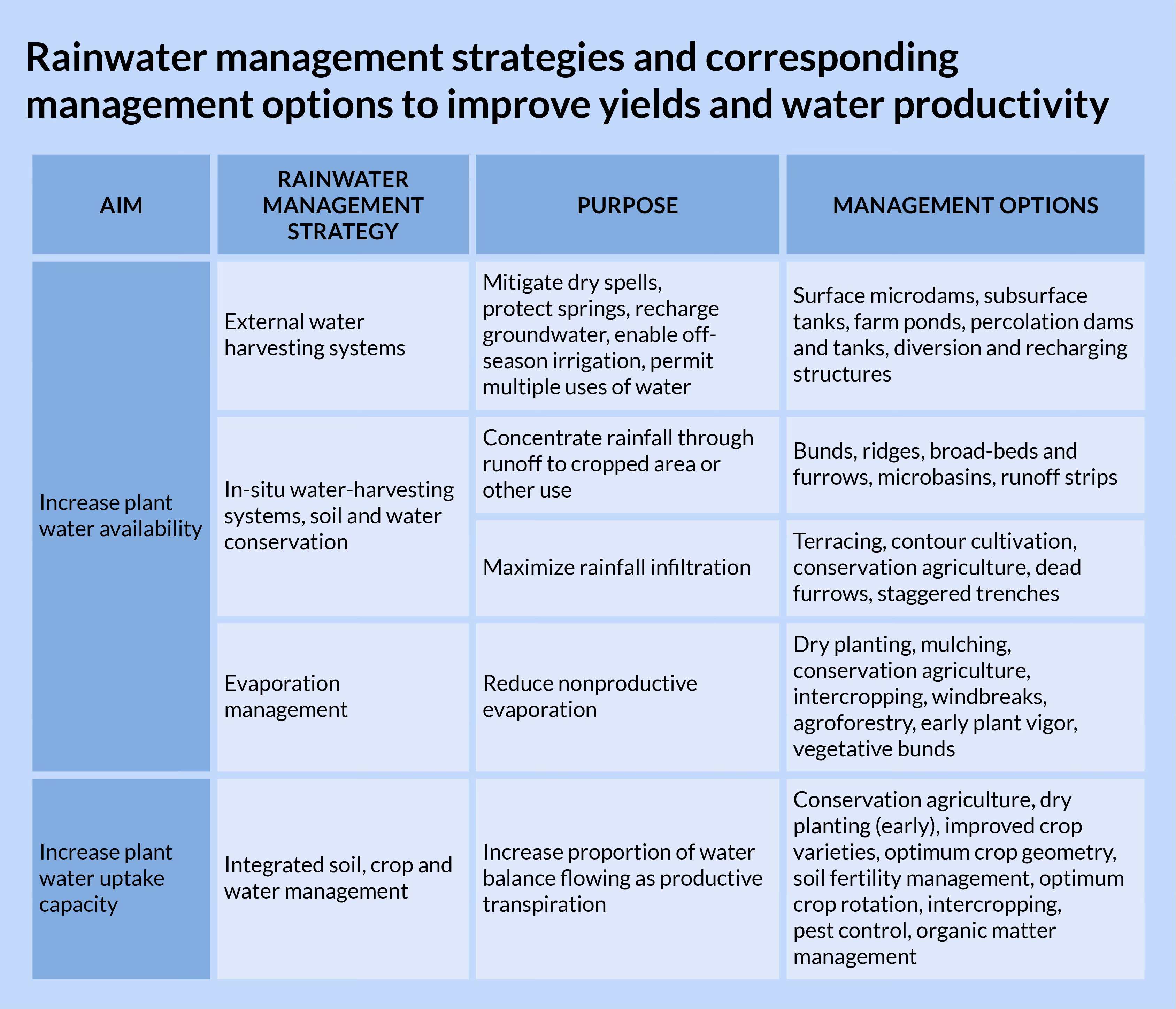
Trees are also great water retainers. Their roots can help retain more water and moisture in soil, and their shade reduces evaporation, including from ponds under trees.
This has health benefits for the community. Furthermore, reducing the burden of water collection, which falls disproportionately on women and children, also reduces discrimination and can improve women’s opportunities and girls’ education.
In many areas, competition for that water is growing. For drinking, other crops, industry, and so on. Climate change is also changing when it arrives, and often, changing its pattern. The start of rains is unpredictable. So is their end. It is often more intense. Meaning more damaging. Rains may be shorter, meaning less stays in the soil. The growing season is shorter. Cotton and food crops both suffer. This is why it’s vital to help farmers experiment with and introduce new water management tools. Given spare income, they will. They might change when they plant. Seek shorter seasons or more drought resistant varieties. They might try to harvest water. They might also try to move to some form of irrigation – if water sources exist, and water is of the right quality, and not, as happens, salty, or scarce. It is important to ensure supply chain rewards allow investment in sustainable solutions.
How supply chains can help
This is one of the areas actors in the supply chain can help with. Seek to understand what farmers need to adapt, and help them acquire it. Equally, climate loss and damage funds should help fund resilience and adaptation, locally and at regional and national scales. That is, flood and drought management, water harvesting, and breeding even more drought and stress tolerant seeds. It also means strengthening financial services such as insurance, compensation, and credit that enable farmers not just to recover but to plan, adapt, and thrive.
Next, we will turn to irrigated cotton.

Simon Ferrigno is a writer and researcher focusing on cotton and sustainability, currently based in Derbyshire, UK.